


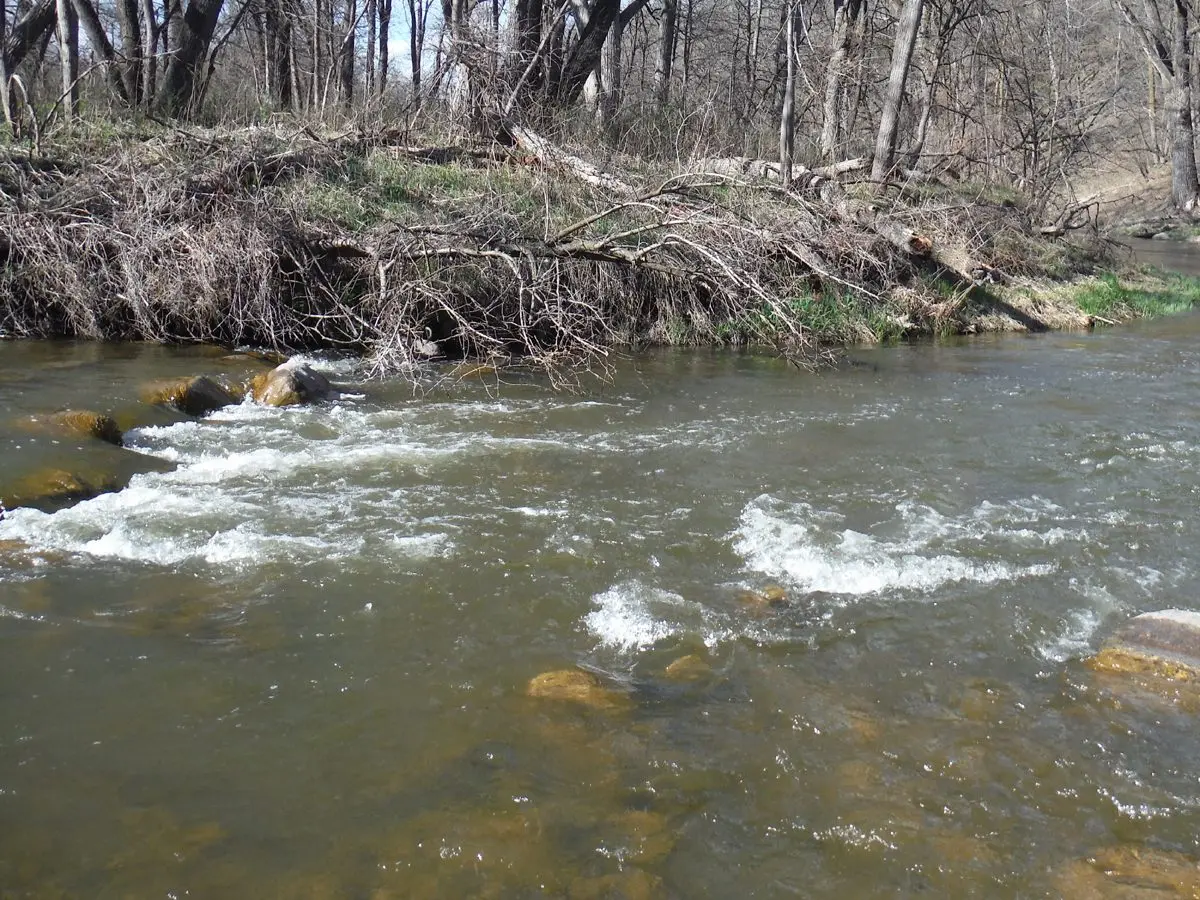
Count ‘Em Up. How many fish-holding elements are in this stretch of stream? Those places where structure, changes in flow, and edges are prevalent and interacting for the benefit of fish are great places to angle. Simonson Photo.
By Nick Simonson
If you’re a new angler or one just passing the passion along to someone coming up the learning curve, knowing where to cast for fish will help generate more success on the water. Whether fishing on moving water like a river or stream, or angling still options like ponds, reservoirs and lakes, make note of these three elements to help connect you with all species.
1. Structure. It could be man made, like docks, rip-rapped shorelines, and bridges; or natural items such as reeds, weed lines, fallen trees, timber piles, or scattered boulders naturally deposited on a water, just about any structure is going to hold fish, and provide all the things they need. From cover which protects them from sunlight and predators such as birds, to the creation of a food web held by woody structures which hosts small creatures, insects, minnows and more, items of structure within a river or a lake are a great place to find fish. They also help test developing casting skills, so make sure to use low-cost lures like jigs, tubes and other easy-to-lose items until each pitch is perfect.
2. Edges. Anywhere water meets its end is where you’re likely to find fish. These edges include the surface of the water, where it connects with the air above. Here insects rise from the water, and fall into it either accidentally, or on purpose to beget the next generation. As a result, fish will follow that food source and patrol the surface, as these edibles, along with smaller fish and panfish, draw predators up near the top of the column for a look. Similarly, check that point where the water meets the substrate of a lake or river. The bottom of a body of water will hold crayfish, insect larvae and attract other types of fish as well, like sculpins which bass, walleyes and other predators eat. Finally, that point where the water meets the land is another key edge where terrestrial creatures – ants, grasshoppers, frogs and even birds – can fall in and become lunch. Target these spaces to connect with fish eyeing the edge of their environs for something to eat.
3. Flow. Those stretches where fast-moving water meets slower moving water create places where fish lie in wait for prey and simply to conserve energy against the current. Target eddies where food, detritus, and other elements swirl about, and fish look for an easy meal. Keep an eye out too for those items of structure which disrupt the flow and create pockets to cast to, as trout and smallmouth bass, along with other riverine fish will use them as breaks against the rushing water. Slicks and current seams can be subtle, created by the shifting of a sandbar. Look for clues on the surface to see how fast and slow water meet. Also, don’t forget that even on lakes, there can be current as well. Pinch points such as the mouths of bays, or bridges built on piers extending into a reservoir can create a point where water moves through, driven by wind or inflow. Small natural feeder streams like creeks should be labeled as go-to areas on a lake map as well and fished thoroughly, adding current to an otherwise still looking option.
While each fish species will react differently to these three keys to great fishing, knowing the basics of how structure, edges and flow benefit everything from bass to walleyes to panfish to trout and more will be beneficial for anyone learning the ropes, or simply looking to learn a new lake. Keep them in mind, explore each element and especially make note of those places on a water where they all come together for an excellent angling experience.
Simonson is the lead writer and editor for Dakota Edge Outdoors.